17-04-2026
CEOs must work harder to be trusted
Something has shifted in the way people listen to those in positions of authority.
Where there was once a baseline of deference, there is now, increasingly, suspicion.
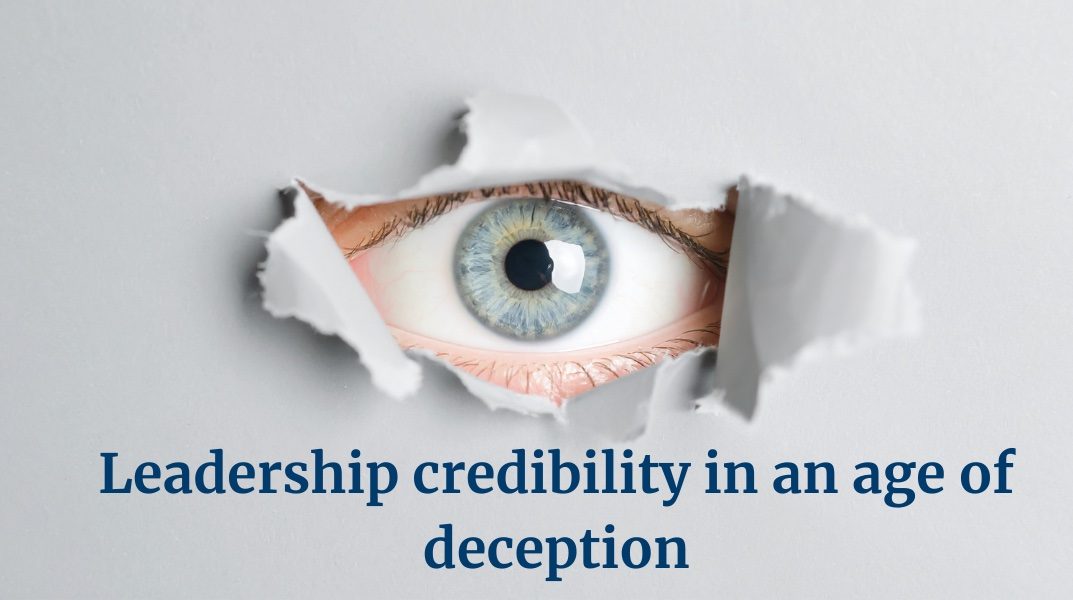
We live in an era saturated with deception.
- Politicians caught in blatant lies.
- Documentaries laying bare the corruption of once-celebrated leaders.
- Social media fed by "influencers" pretending authenticity to sell something.
- Fake images and fabricated videos.
- News stories designed not to inform, but to inflame.
- Inboxes flooded with scams.
In this environment, scepticism has become the norm.
Outrageous statements that would be completely unacceptable from an ordinary citizen have become normalised for some of those at the top of public life.
This has a cost, and CEOs are paying for it.
Businesses are not insulated from the outside world
Employees do not switch off their critical mind when they walk through the office door.
They bring with them the same distrust they have developed from being misled in other parts of their lives.
When CEOs stand up to deliver a company update, they are not speaking to a neutral room.
They are speaking to people primed to look for the spin, the omission, the half-truth.
This is not a comfortable reality for those in leadership.
But the leaders who thrive are those who accept it and respond accordingly.
Developing trustworthiness
Building trust in this environment is not about better messaging or more polished communications.
It requires a genuine commitment to honesty, even when honesty is uncomfortable.
This is what it means in practice.
1. Never lie, not even by omission
Partial truths are detected quickly and do more damage to trust than the difficult news you were trying to soften.
2. Welcome difficult questions
Giving honest, considered answers to difficult questions is a powerful way to build trust.
3. Treat employees as intelligent adults
People can handle complexity, but they resent being condescended to. Share the full picture including the messy areas and the unresolved issues.
4. Explain the reasoning behind hard decisions
People are more inclined to accept decisions they disagree with, if they understand how those decisions were reached.
What breeds resentment is being told the outcome without explanations, as if the reasoning behind the decision was none of their business.
5. Admit vulnerability and limitations
Leaders who pretend to have all the answers inspire less confidence than those who say "I don't know yet, but this is how we are approaching it."
Vulnerability, used appropriately, is a strength.
This is an opportunity
This is a genuine opportunity, precisely because trust has become so scarce.
Leaders who demonstrate genuine integrity stand out.
The bar has been lowered by bad actors in public life. But that means clearing it is not only necessary but, paradoxically, more impactful than ever.
The question for leaders is not whether their employees are watching with sceptical eyes: of course they are!
The question is what they will find when they look.
Do you agree that trust in leadership has become harder to build?